Your Website Gets Seen in AI Search. Is It Bringing You Customers?
Build a practical website reporting dashboard that separates AI citations, search rankings, traffic and qualified leads—without confusing visibility with sales.

Structured data describes a page in a machine-readable format. It can help search engines interpret content and make an eligible page suitable for supported rich results. It does not guarantee rankings, a knowledge panel, review stars or AI citations.
The useful question is which facts your page can accurately describe, not how many schema types you can add.
For a business website, Organization can identify the publisher, contact details and logo. Article or BlogPosting can describe an article with its headline, publication date and author. BreadcrumbList can describe a real page hierarchy.
Service is useful for describing an offered service, but it is not a promise that Google provides a dedicated Service rich result. LocalBusiness needs accurate business details; do not add a fabricated address to fill a field. A remote service-area statement is different from a staffed local office.
Choose types that fit the page. Avoid attaching Product, JobPosting, Review or AggregateRating markup to content that does not meet the relevant requirements.
Schema.org defines a broad vocabulary. Google's supported search features use a subset with their own policies, required fields and eligibility rules. A valid Schema.org item can therefore produce no Google search enhancement.
FAQPage remains a vocabulary type, but Google's documentation changelog records that FAQ rich results stopped appearing in May 2026. Keep useful question-and-answer content for readers; do not add it everywhere merely to chase a retired display feature.
Similarly, visible reviews do not automatically make a business eligible for review stars. Google's review rules include restrictions on self-serving reviews about the organisation hosting them. A genuine quote can be useful to a buyer without being marked up as an eligible search review.
The facts in the markup should match the page and the current business. Use the real publisher, accurate dates and absolute image URLs. If a price is a hypothetical example, do not publish it as an actual product offer.
An author should have a visible byline or another clear attribution. A rating needs a legitimate underlying source; a decorative five-star graphic does not create one. Do not invent awards, credentials or locations to enrich the data.
For an article correction, retain the original publication date and update dateModified when the article meaningfully changes. Do not update all dates simply because you deployed the site.
On WordPress, an SEO plugin can provide a starting point. Review the output alongside any theme, page-builder or specialist plugin that also creates markup. Two copies are not always invalid, but contradictory descriptions of the same entity are unhelpful.
On a custom website, JSON-LD is a practical format. Use stable entity identifiers so an article publisher can refer to the same organisation used elsewhere on the site. Keep the canonical URL, sitemap and structured-data URL consistent.
Use Schema.org's validator for vocabulary and syntax. Use Google's Rich Results Test for currently supported Google features. A report saying that no eligible rich result was detected does not necessarily mean a page has an SEO error.
Check the rendered HTML as well as the source. Then review Search Console reports when Google has processed the page. Passing a local JSON parser checks syntax; it does not independently confirm every policy or search eligibility condition.
Start with accurate Organization information, meaningful page titles and working navigation. Add Article information to published guides and breadcrumbs where useful. Describe services without inventing offers or local premises. Add review or product markup only for content that actually qualifies.
Structured data is one part of our SEO service. The larger job remains making the page useful, trustworthy and accessible to visitors and crawlers.
The recommendations in this guide are Flowzync’s practical opinion. The linked documentation supports the relevant platform or technical requirements; it does not establish a promised commercial result.
A block of machine-readable data in a page's code that tells search engines what the page is about — that this string is a price, this one is an opening time, this one is a question and that one is its answer. It does not change what a visitor sees. It changes what a search engine can state confidently about you.
Structured data can help interpretation and eligibility for supported search features. It does not guarantee rankings, rich results or AI citations. FAQ rich results no longer appear in Google Search as of May 2026.
Use types that describe real content: Organization, Article or BlogPosting, and BreadcrumbList are common examples. Service can describe an offered service. Review, Product and LocalBusiness require appropriate facts and must meet the relevant search policies.
Yes, through a structured data manual action. The cause is almost always marking up something that is not visible on the page — invented star ratings, FAQs no visitor can see, prices that do not appear. The rule is simple: if it is in the markup it must be on the page.
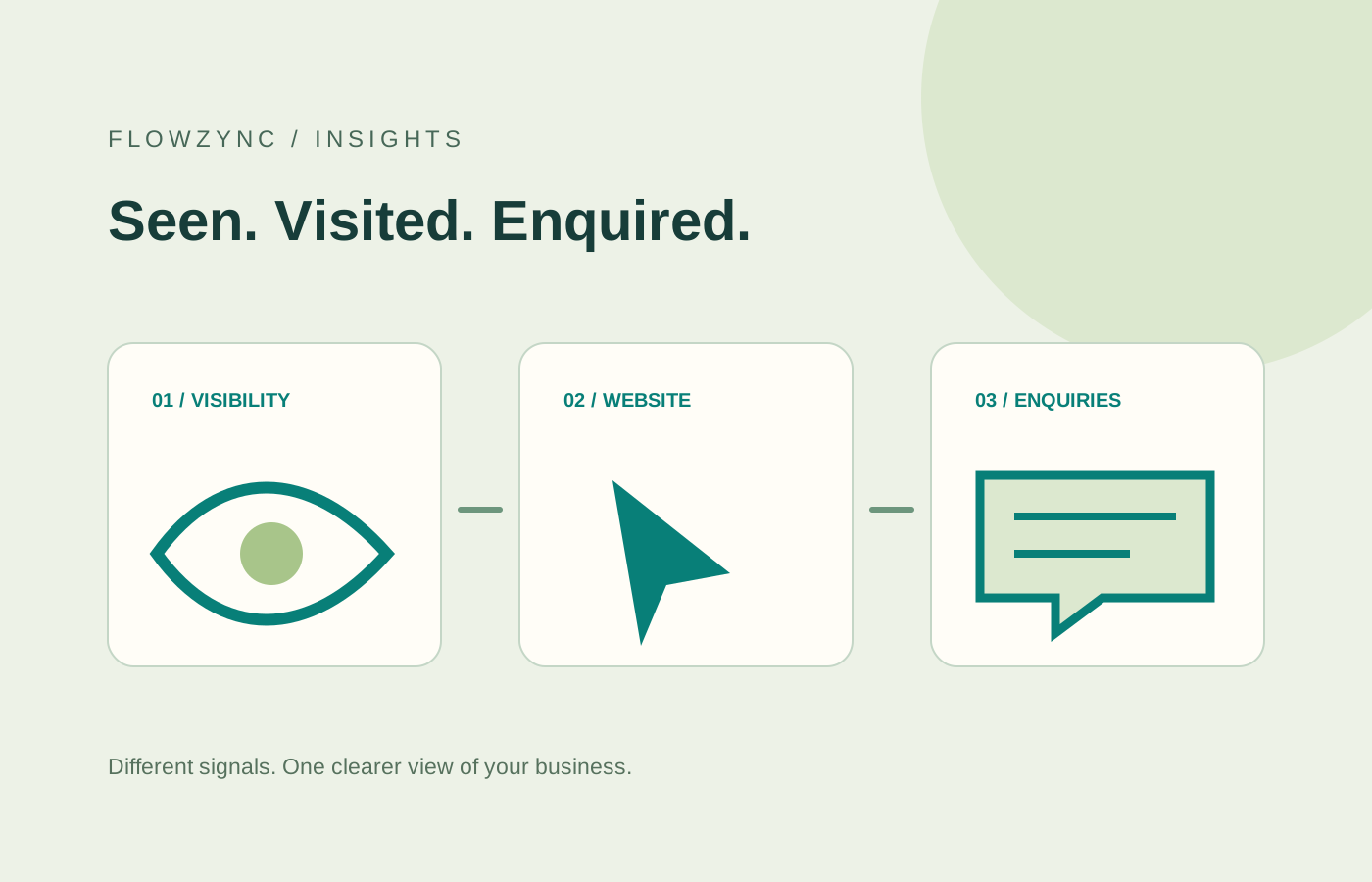
Build a practical website reporting dashboard that separates AI citations, search rankings, traffic and qualified leads—without confusing visibility with sales.

Understand Bing’s new Topics Portfolio report, check your AI citations and turn useful opportunities into a focused content plan for your business.

The redirect map, the order of operations and the checks that keep traffic intact through a redesign, a platform change or a new domain.
Everything we write about, we build daily. Book a free call and let's apply it to your project.
Tell us about your project